
MSTR crypto stock in big trouble
Few figures in finance generate as much debate as Michael Saylor. As the executive chairman of MicroStrategy, Saylor has built a reputation for making aggressive Bitcoin bets that many investors initially dismissed as reckless. Yet, time and again, critics who underestimated his ability to navigate capital markets have been proven wrong.
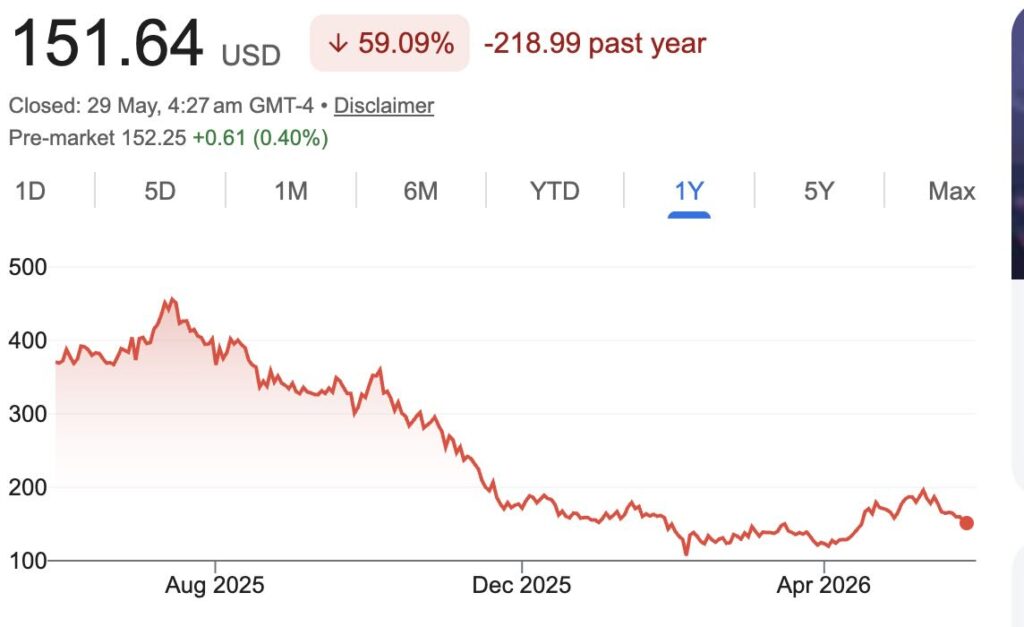
A recent observation by investor Jeff Dorman highlights this reality. While skepticism surrounding MicroStrategy’s strategy remains widespread, the company has repeatedly found creative ways to raise capital, expand its Bitcoin holdings, and strengthen its position as one of the largest corporate holders of the digital asset. This has led many market participants to question whether traditional valuation models are sufficient for analyzing the company.
Arca CIO Jeff Dorman said MSTR’s situation has “gotten out of hand,” arguing that Strategy’s roughly $15 billion in preferred stock carries about $1.5 billion in annual dividends. He said the company raised $2 billion in cash via stock to ease near-term default concerns, but later used the cash buffer to buy back 2029 bonds instead of funding dividends. Dorman said MSTR, BTC and preferred shareholders are now “really in a bind” for the first time, and that someone may “lose badly” within the next four months.
I think the market is having a tough time realizing that $MSTR is no longer a relevant buyer of $BTC, but also will never be a forced seller.
— Jeff Dorman (@jdorman81) December 2, 2025
So it's just a boring story now with a massive, confusing cap structure https://t.co/FdWWIUQ1Td
The core debate revolves around whether MicroStrategy’s premium valuation is justified. Bears argue that the company’s stock often trades far above the value of its Bitcoin holdings, creating significant downside risk. Bulls, however, believe Saylor’s financial engineering and ability to access capital markets provide advantages that conventional analysis fails to capture.
What makes the situation particularly fascinating is that investors have spent years predicting the collapse of the strategy, only to watch it continue working. Each successful capital raise, convertible note offering, or treasury expansion has reinforced the perception that Saylor understands market dynamics better than many of his critics.
Whether one is bullish or bearish on MicroStrategy, one lesson is clear: betting against Saylor without understanding his capital markets playbook has historically been a costly mistake. Markets may not always reward innovation, but in this case, they continue to reward conviction.